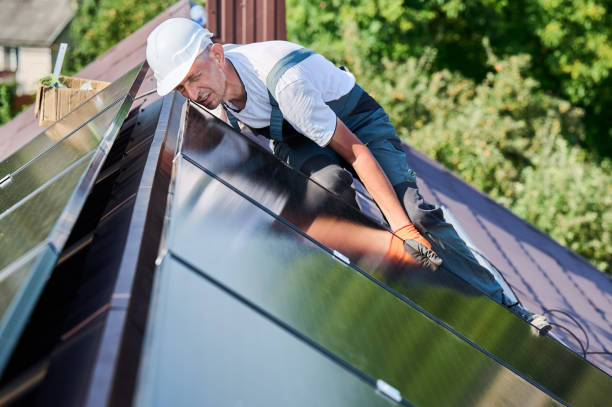
So you’ve decided to go solar. Fair dinkum choice—it’s one of the smartest investments you can make for your home. But now comes the part that makes many Australian homeowners a bit anxious: actually choosing the right solar power panels for house. There are so many brands, specifications, and options floating around that it’s easy to feel completely overwhelmed.
Here’s the thing though: choosing the right solar power panels for house isn’t rocket science. Yes, there are technical details to understand, but if you know what to look for, the process becomes straightforward. We’re going to walk through everything you need to know to make a genuinely confident decision about which solar power panels for house will work best for your home and your budget.
Understanding What Makes Solar Power Panels Different
Before we dive into specific brands and models, let’s talk about what actually makes solar power panels for house different from each other. Because honestly, from the roof, they all look pretty similar. But under the hood, there are some genuinely important differences.
Panel Efficiency
This is the percentage of sunlight that actually gets converted into electricity. Modern solar power panels for house typically have efficiencies ranging from 15% to 22%.
Now, that might not sound like much difference, but it actually matters. A 20% efficient panel produces about 33% more electricity than a 15% efficient panel from the same roof space. If your roof space is limited, higher efficiency panels let you generate more power in the same area.
Higher efficiency panels usually cost more, but the extra generation might justify the cost if you’ve got limited roof space.
Panel Types
There are three main types of solar power panels for house:
Monocrystalline panels are made from single-crystal silicon. They’re the most efficient (usually 18-22%), they perform better in low-light conditions, and they last longest. They’re also usually the most expensive. If you’ve got limited roof space or want absolute maximum performance, these are genuinely worth the premium.
Polycrystalline panels are made from multiple silicon crystals. They’re slightly less efficient (usually 15-17%), slightly cheaper, and still perform brilliantly. For most Australian homes with decent roof space, these are the go-to choice—great balance of price and performance.
Thin-film panels are cheaper but significantly less efficient and degrade faster. They’re rarely used in residential installations these days. You probably won’t even encounter them, but avoid them if you do.
Durability and Warranty
This is crucial. Quality solar power panels for house should last 25-30 years. But that doesn’t mean they’re all built the same.
Look for panels with:
- 25+ year manufacturing defects warranty
- 25+ year performance warranty (guaranteeing they’ll generate at least 80-85% of their original capacity after 25 years)
- Proper certification (IEC 61215 for quality, IEC 61730 for safety)
Cheap panels might come with 10-year warranties. That’s basically admitting they expect the panel to fail sooner. Avoid them.
Evaluating Solar Power Panels For House: Key Specifications
When you’re looking at solar power panels for house, here are the numbers that actually matter:
Wattage (Peak Power Rating)
This is measured in watts (W) or kilowatts (kW). A 400W panel generates up to 400 watts of power under ideal conditions. Higher wattage panels are generally better (more power from the same space), but they also cost more. Most modern residential panels range from 350-450W.
Efficiency Rating
As mentioned, this is the percentage of sunlight converted to electricity. Higher is better, but diminishing returns apply. A 20% efficient panel is much better than a 15% panel, but a 22% panel might not be worth the premium.
Temperature Coefficient
This is how much the panel’s efficiency drops when temperatures rise. Every panel loses some efficiency in heat. The temperature coefficient is measured as a percentage per degree Celsius. Lower is better—you want panels that don’t lose much efficiency when it’s hot.
Australian panels that handle heat well are genuinely valuable. Look for temperature coefficients of -0.4% per degree Celsius or better.
Degradation Rate
All solar panels slowly degrade—they generate slightly less electricity each year. Quality panels degrade at about 0.5-0.8% annually. Cheap panels might degrade at 1%+ per year. Over 25 years, that difference compounds into genuinely significant lost generation.
Top Solar Power Panel Brands For Australian Homes
Now, there are literally hundreds of solar panel manufacturers globally. But for Australian homes, certain brands have proven track records of reliability, performance, and warranty support.
Tier 1 Brands (Premium, Reliable, Excellent Warranty Support)
These are the brands you see most often on quality Australian installations. They cost a bit more but deliver consistent performance and genuine support:
Canadian Solar: Genuinely reliable Canadian manufacturer with excellent Australian support. They produce quality monocrystalline panels in the 380-440W range with 25-year warranties. Efficiency ratings are usually 19-20%.
JA Solar: Chinese manufacturer that’s built a strong reputation for quality. Their panels punch above their weight price-wise. You’ll get 400-430W panels with solid 25-year warranties and efficiency around 20-21%.
Jinko Solar: Another reliable Chinese manufacturer with excellent quality control. Their panels are widely available in Australia, typically 380-420W with 25-year warranties and 19-20% efficiency.
REC Group: Norwegian manufacturer with a genuinely stellar reputation. Their panels are premium-priced but absolutely deliver on quality. Look for 400-430W panels with 25-year warranties and efficiency around 21-22%.
Trina Solar: Chinese manufacturer with massive production scale and genuine quality control. Their panels are typically 380-430W with 25-year warranties and efficiency around 20-21%.
Mid-Tier Brands (Good Value, Reliable, Adequate Warranty Support)
These brands offer solid quality at better prices than premium brands:
LONGi Solar: Massive Chinese manufacturer specialising in monocrystalline panels. They’re reliable and often more affordable than some premium brands. Typically 400-440W with 25-year warranties and 20-21% efficiency.
Risen Energy: Another quality Chinese manufacturer offering good value. Typically 400-420W panels with 25-year warranties and 19-20% efficiency.
Hanwha Q Cells: Korean manufacturer with solid quality and good Australian presence. Typically 380-410W panels with 25-year warranties and 19-20% efficiency.
Budget Brands (Lower Cost, But Still Reputable)
These aren’t dodgy, but they’re lower-cost options:
Sugam Solar: Indian manufacturer with adequate quality. Typically 350-390W with 20-25 year warranties. Efficiency around 17-18%.
Vikram Solar: Another Indian manufacturer offering budget options without being completely unreliable. Similar specs to Sugam.
Brands to Avoid
Honestly, there are some genuinely dodgy solar power panels for house manufacturers out there. Avoid these:
- Unknown Chinese brands with no warranty support in Australia
- Panels with warranty periods less than 20 years
- Brands with multiple online complaints about failed panels
- Panels significantly cheaper than comparable quality brands (there’s usually a reason)
Matching Solar Power Panels For House to Your Situation
Here’s the thing: the “best” solar power panels for house depend on your specific circumstances. Let me break down the decision framework:
If You’ve Got Limited Roof Space
Go with high-efficiency panels from premium brands. Canadian Solar, REC, or Jinko at 20%+ efficiency. Yes, they cost more, but you need maximum generation from minimal space. The extra cost is worth it.
If You’ve Got Good Roof Space and Limited Budget
Mid-tier brands like LONGi or Risen offer excellent value. You can afford to be slightly less efficient because you’ve got space. You’ll still get quality panels at better prices than premium brands.
If You Want Maximum Long-Term Value
Go with established brands offering 25-year warranties. It doesn’t have to be the most expensive option, but stick with brands with proven Australian support. You want to know that warranty claims in 15 years will actually be honoured.
If You’re Concerned About Heat Performance
Australian conditions are hot. Look specifically for temperature coefficients better than -0.4% per degree Celsius. Premium monocrystalline panels from brands like REC or Canadian Solar typically perform better in heat.
If You Want to Future-Proof for Battery Storage
Some installers recommend matching panel brands with inverter brands. If you’re planning battery storage later, chat to your installer about compatibility. It doesn’t always matter, but sometimes it does.
Technical Specifications to Compare
When you’re actually comparing quotes from installers, here’s what you should check:
Panel Specifications:
- Wattage (higher is better)
- Efficiency (20%+ is genuinely solid)
- Warranty period (25 years is standard)
- Temperature coefficient (lower is better, especially for Australia)
- Degradation rate (0.5-0.8% annually is normal)
Inverter Specifications:
- Brand and model
- Warranty (10 years is decent, 12-15 is better)
- Efficiency (modern inverters are typically 97-98% efficient)
- Battery compatibility (if you’re planning batteries later)
Overall System Details:
- Total system wattage (measured in kW)
- Expected annual generation (in kWh)
- Performance ratio (how efficiently the system converts sunlight to usable electricity)
- Warranty terms and what they cover
Questions to Ask Your Solar Installer
Before you commit, ask your installer these questions:
About the Panels: “Why did you choose these specific panels for my home?” “What’s the warranty period and what does it cover?” “How do these panels perform in hot conditions?” “Are these panels certified by relevant standards (IEC 61215, IEC 61730)?” “What’s the expected degradation rate?”
About the System: “What’s your expected annual generation for my home?” “How did you calculate that figure?” “What happens if my system underperforms?” “Can I monitor my generation in real-time?”
About the Warranty and Support: “What happens if a panel fails in year 5? Year 15?” “How quickly can you service warranty issues?” “What’s your process for warranty claims?” “Will you still be around in 15 years when I might need warranty support?”
A good installer will answer these questions thoroughly. If they’re evasive or dismissive, that’s a red flag.
Cost vs Quality: Finding the Sweet Spot
Here’s an honest reality: you’ll see quotes with vastly different prices. Sometimes it’s about panel quality, but often it’s about:
- System size (larger systems cost more)
- Installation complexity (roof type, accessibility)
- Installer overhead and margins
- Warranty and support offerings
A $8,000 system and a $12,000 system might both be genuinely good choices. The difference might be:
- Panel brand/quality (premium vs mid-tier)
- System monitoring capabilities
- Warranty terms
- Installer support level
- Installer overhead
Don’t automatically assume the cheapest is bad or the most expensive is best. Compare what you’re actually getting for the price.
Generally, spending 10-15% more for premium panels and better warranty support is genuinely worthwhile. Spending 50% more for marginal quality improvements probably isn’t.
Regional Considerations for Australian Homes
Hot Climate Areas
If you’re in inland or very hot regions, prioritise panels with excellent heat performance. Temperature coefficient matters more to you.
Coastal Areas
Salt spray is a consideration. Look for panels with strong corrosion resistance and quality framing (aluminium frames should be anodised).
High-Wind Areas
You want panels that are certified for high-wind loads. Your installer should know local requirements, but it’s worth asking.
Shady Areas
If you’ve got partial shading, look for panels with microinverters or optimisers. They handle shading better than string-inverter systems.
The Reputation Factor
Honestly, brand reputation matters. Not because of marketing, but because:
- Established brands have better warranty support
- They’re more likely to be around in 15+ years if you need warranty service
- They’ve got proven track records in Australian conditions
- They’re less likely to cut corners
You want panels from brands that will still honour warranties when you need them. That means established, reputable manufacturers.
Making Your Final Decision
Here’s your decision checklist for solar power panels for house:
- Understand your consumption and system size needs (chat to installers about this)
- Identify your priorities:
- Budget conscious?
- Limited roof space?
- Maximum future-proofing?
- Environmental credentials?
- Get multiple quotes with different panel options
- Compare not just price, but entire packages:
- Panel quality and warranty
- Inverter quality and warranty
- System monitoring
- Installer support and track record
- Ask tough questions about warranty support and installer longevity
- Go with established, reputable brands with genuine Australian support
- Get everything in writing—exact panel models, warranty terms, expected performance
The Bottom Line
Choosing solar power panels for house doesn’t have to be stressful. Stick to established brands (Canadian Solar, JA Solar, Jinko, REC, Trina, LONGi), compare specifications honestly, and prioritise warranty support. These brands all produce quality panels that will genuinely perform well in Australian conditions.
The difference between good and great is usually marginal. The difference between good and dodgy is massive. Avoid the cheap no-name brands, go with mid-tier or premium established manufacturers, and you’ll be absolutely fine.
Your solar power panels for house will last 25-30 years. Spending a bit extra for quality now is genuinely smart. You’ll get better performance, sleep better knowing warranty claims will be honoured, and ultimately get better returns on your investment.
Quick Reference: Solar Power Panels For House Selection Guide
Limited Budget, Good Roof Space: → LONGi, Risen, or JA Solar → 400-420W panels → 19-20% efficiency → 25-year warranty
Limited Roof Space, More Budget: → REC, Canadian Solar, or Jinko → 420-440W panels → 20-21% efficiency → 25-year warranty
Hot Climate Priority: → REC or Canadian Solar (better heat performance) → 400-430W panels → Focus on temperature coefficient < -0.4% → 25-year warranty
Future Battery Planning: → Check brand compatibility with preferred inverter → Otherwise, any quality brand works fine → Ensure inverter supports battery-ready specifications
Maximum Value: → Mid-tier brand (JA Solar, Jinko, LONGi) → 400-420W panels → 20% efficiency → 25-year warranty → Strong Australian support
Get quotes from reputable installers, compare these specifications, ask hard questions, and you’ll end up with solar power panels for house that deliver excellent returns for decades to come. That’s genuinely all there is to it.