Interview preparation involves more than predicting questions and rehearsing polished replies. Candidates must organise ideas, communicate relevant evidence, explain reasoning, manage time, and respond naturally when conversations change direction. AI interview preparation tools can support this process by creating practice questions, simulating mock interviews, reviewing responses, and highlighting patterns that deserve attention. However, automated feedback has limits. Candidates still need genuine knowledge, independent judgement, role research, and authentic communication. Used responsibly, an AI interview assistant can serve as a practice partner rather than a substitute for preparation or personal capability.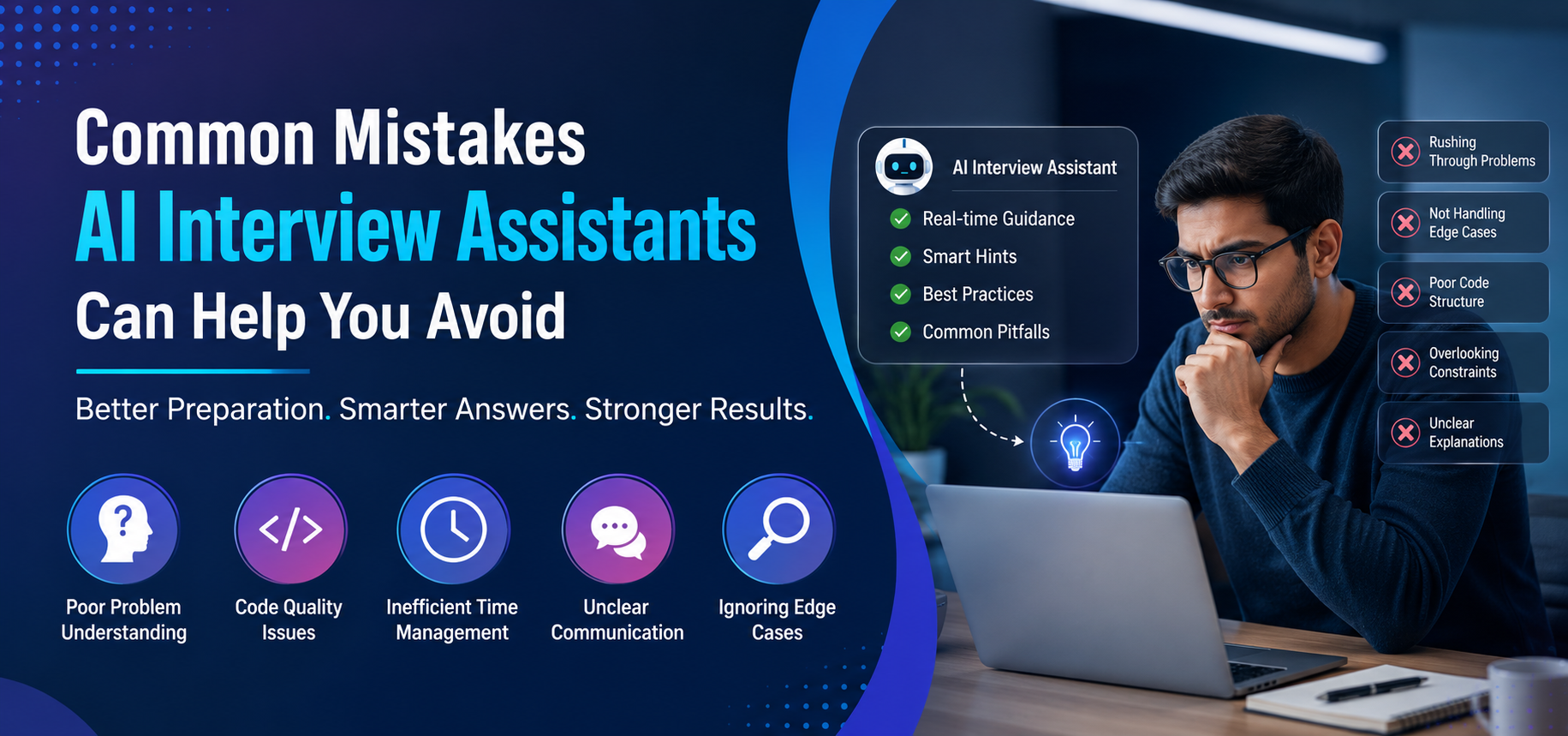
Losing Focus When Answering Interview Questions
A strong response addresses what the interviewer actually asked. Candidates sometimes begin with relevant information but drift into background details, unrelated achievements, or lengthy explanations. Consequently, even valuable experience can become difficult to assess.
Giving Overly Long or Unstructured Answers
Mock interviews can help candidates notice when answers take too long to reach the main point. Answer analysis may flag repetition, unnecessary detail, or missing structure.
Missing the Actual Question
Another common mistake involves answering a nearby question instead of the one asked. For example, a candidate asked about resolving disagreement may focus mainly on project success. Simulated interview questions can train candidates to identify the central competency before responding.
Candidates should pause, identify the request, and then choose evidence that directly supports it. AI can point out possible mismatches, but human review remains important because automated systems may misinterpret nuance.
Weak Examples and Generic Role Preparation
Interviewers often need evidence rather than broad claims. Statements such as “I communicate well” or “I solve problems quickly” provide limited context unless candidates explain what they did and why it mattered.
Replacing Vague Claims With Specific Evidence
Interview practice can reveal answers that lack context, individual contribution, decisions, or outcomes. AI-generated prompts may encourage candidates to add useful detail and compare stronger and weaker versions of structured responses.
Moving Beyond Generic Responses
Generic preparation can create answers that sound suitable for almost any position. Role-specific candidate preparation should reflect the job description, required skills, likely responsibilities, and relevant technical knowledge.
An AI system may generate targeted interview questions from role information supplied by the candidate. Still, candidates must verify whether those questions reflect realistic expectations.
Communication Habits That Reduce Clarity
Good content can lose impact when delivery becomes repetitive, hesitant, or difficult to follow. Communication skills therefore deserve deliberate practice alongside answer content.
Filler Words, Repetition, and Memorised Scripts
Repeated mock interviews may expose frequent filler words, duplicated phrases, or habitual openings. Candidates can use this feedback to practise shorter pauses and more varied, direct language.
Memorising generated responses word-for-word creates another problem. A scripted answer may sound unnatural and can become difficult to adapt when an interviewer changes wording or asks for clarification. Instead, candidates should remember key points, evidence, and reasoning. This approach preserves consistency while allowing natural conversation.
Inconsistent Information and Poor Time Control
Practice sessions can also reveal conflicting dates, responsibilities, technologies, or outcomes across different answers. Timed interview practice can help candidates balance detail with brevity.
Gaps in Behavioural and Technical Interview Practice
Preparing only for familiar questions can leave candidates exposed when interviewers probe reasoning, decisions, or unfamiliar scenarios.
Neglecting Follow-Up Questions
Candidates sometimes prepare polished opening responses but struggle when asked, “Why did you choose that approach?” or “What would you change?” AI-powered mock interviews can generate follow-up questions that test depth and consistency.
Failing to Explain Technical Reasoning
Technical interviews often assess more than a final answer. Candidates may need to communicate assumptions, alternatives, trade-offs, debugging steps, architecture choices, or problem-solving logic.
AI interview feedback can help identify explanations that skip important reasoning. However, candidates must independently verify technical suggestions through reliable documentation, established concepts, or qualified sources. AI can produce incorrect, outdated, or overly confident answers. Therefore, subject knowledge remains essential.
Using AI Responsibly During Candidate Preparation
AI can support job interview preparation, but preparation and live assistance are not the same activity. Ethical use requires candidates to respect recruitment rules and represent their own abilities accurately.
Avoiding Excessive Dependence on Generated Answers
Candidates who rely heavily on generated responses may lose their individual voice or accept weak suggestions without scrutiny. AI outputs can also overlook organisational context, role expectations, cultural nuances, or specialised technical requirements.
A better approach uses AI for question variety, self-assessment, communication practice, and feedback while keeping final judgement with the candidate.
Respecting Live Interview and Assessment Rules
Some employers or assessment providers may restrict external assistance during interviews, coding exercises, written tests, or other recruitment assessments. Candidates should check the applicable instructions before using any AI tool.
AI-assisted interview preparation before an assessment differs from secretly obtaining generated answers during a prohibited live process. Candidates should never use AI to misrepresent knowledge, conceal external assistance, bypass monitoring, or evade assessment controls. When rules permit specific tools, candidates should stay within the stated boundaries.
Turning Feedback Into Better Interview Practice
Feedback becomes useful only when candidates apply it deliberately. Instead of trying to fix every issue simultaneously, candidates can identify recurring weaknesses and practise them in focused sessions.
Regular practice also helps candidates become more flexible when questions take unexpected directions.
Conclusion
AI interview tools can help candidates spot unfocused answers, vague examples, filler words, weak role relevance, inconsistent information, limited follow-up preparation, and unclear technical reasoning. They can also make repeated interview practice easier through simulated questions and structured feedback. However, effective preparation still depends on accurate knowledge, critical thinking, genuine examples, and natural communication. Candidates should verify technical information, protect their authentic voice, and respect every recruitment process rule. Used within those boundaries, AI can strengthen preparation without replacing the skills and judgement that interviewers expect candidates to demonstrate.