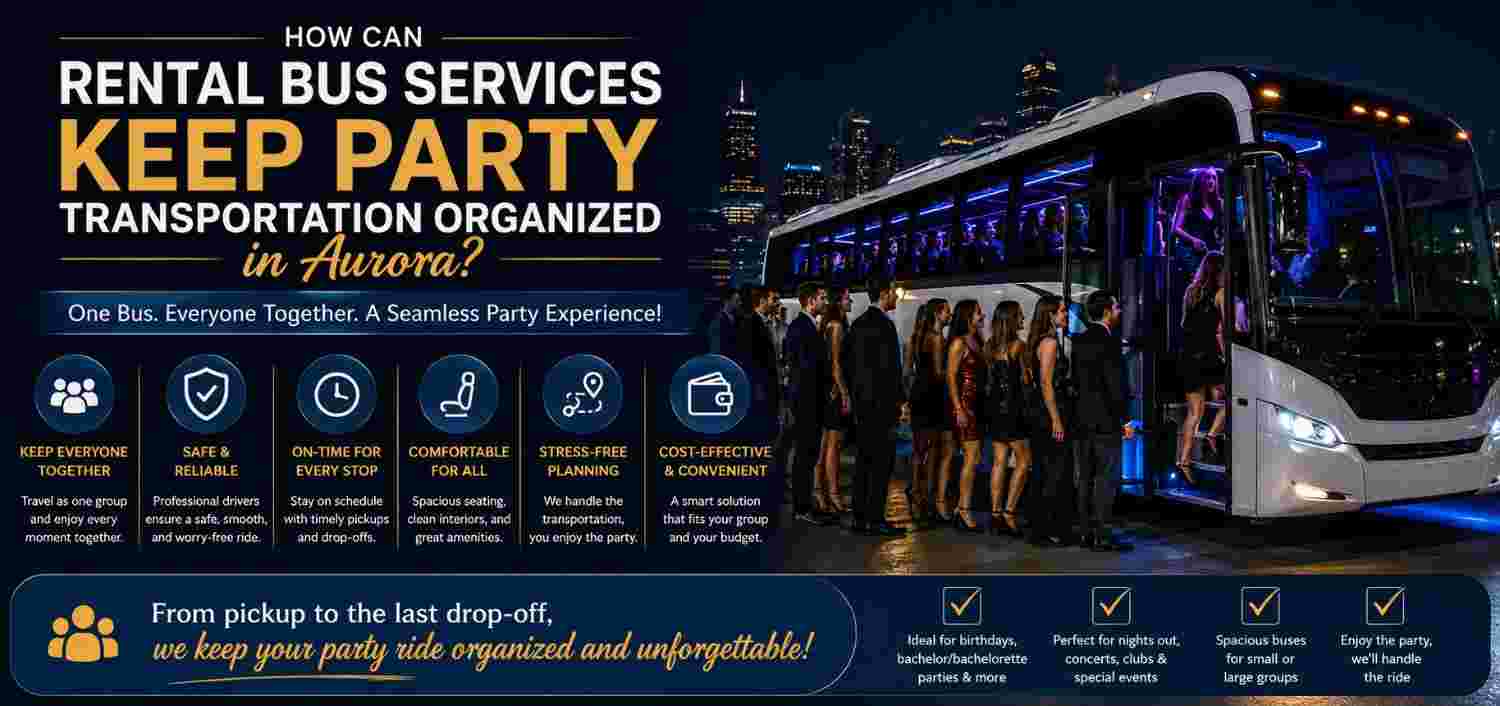
Rental bus transportation can help organize party travel by placing passengers, pickup locations, destinations, and schedules within one coordinated transportation plan. Instead of relying on numerous individual vehicles, organizers can arrange one appropriately sized bus or multiple coordinated vehicles when the group is larger. This approach may simplify communication, scheduled departures, venue transfers, and return transportation for birthdays, anniversaries, family gatherings, dinners, and other private events. However, vehicle capacities, amenities, accessibility features, routes, waiting periods, and booking conditions vary by provider and reservation.
Advance Planning Creates a Clear Group Transportation Plan
Organized event transportation starts with identifying who needs transportation, where passengers will board, which locations the group will visit, and when each movement should occur.
People comparing rental bus services for party aurora should consider the complete transportation schedule rather than selecting a vehicle based only on appearance or advertised capacity.
Information to Establish Before Booking
Organizers should generally determine:
- Approximate passenger count
- Event date and timing
- Primary pickup location
- Additional pickup points
- Event destination
- Planned intermediate stops
- Expected departure times
- Return transportation requirements
- Personal-item or luggage needs
- Accessibility requirements where applicable
Moreover, providing accurate details allows the transportation provider to assess whether the requested itinerary and vehicle arrangement are practical.
Matching Bus Capacity to Group Size Matters
Choosing an appropriately sized vehicle is an important part of party transportation planning. Depending on the provider, available options may include minibuses, shuttle-style vehicles, larger passenger buses, or other group vehicles.
The right option depends on passenger numbers, route requirements, storage needs, and available fleet.
Capacity Is More Than a Seat Count
Organizers should ask about practical capacity rather than relying only on a stated maximum passenger number.
Relevant considerations include:
- Number of passengers
- Seating configuration
- Storage for personal belongings
- Accessibility needs
- Space requirements for approved equipment or items
- Vehicle-specific passenger policies
For example, a family gathering involving luggage may require different space than a group travelling directly to a dinner venue.
Consequently, passenger and storage requirements should be communicated before the vehicle is confirmed.
Centralized Pickups Can Simplify Departure
A single meeting location can make group transportation easier to manage. Instead of asking the vehicle to collect passengers individually, organizers can have everyone meet at one practical pickup point.
Centralized boarding may reduce the number of stops and make departure timing easier to coordinate.
When Multiple Pickup Locations Are Needed
One pickup point is not always practical. Guests may be staying at different hotels, homes, or neighbourhoods.
Multiple pickups may be possible depending on provider policies and the reservation. However, every additional stop can affect travel time, route planning, booking duration, and potentially pricing.
Therefore, organizers should provide all intended pickup locations in advance rather than adding them unexpectedly during the trip.
A Defined Schedule Keeps Passengers Organized
Party transportation works more effectively when passengers know when and where the vehicle will arrive and depart.
A basic event transportation schedule might include:
- Passenger meeting time
- Scheduled departure
- Arrival at the first destination
- Transfer to another venue where applicable
- Return pickup time
- Final drop-off
In addition, organizers should allow reasonable boarding time, particularly for larger groups.
Traffic, weather, road closures, construction, and passenger delays can affect the actual schedule. Therefore, planned times should include reasonable flexibility.
Keeping the Group Together Reduces Fragmented Travel
When guests drive separately, they may take different routes, arrive at different times, or have difficulty finding parking and meeting locations.
Using one vehicle can keep an appropriately sized group together between scheduled destinations. Meanwhile, larger parties may require several coordinated vehicles.
Multiple-Venue Transportation
Some celebrations involve more than one location. A birthday group, for example, might travel from a central pickup point to dinner and then to another lawful event venue before returning.
A prearranged itinerary can establish:
- Venue sequence
- Planned arrival times
- Passenger boarding locations
- Expected waiting periods
- Return arrangements
However, unplanned destinations may affect the reservation. Organizers should therefore ask how additional stops and itinerary changes are handled.
Professional Driver Service Supports Route Coordination
Rental bus transportation generally includes a designated driver responsible for operating the vehicle and following the confirmed itinerary.
Driver responsibilities and service practices vary according to the provider, vehicle type, and applicable requirements.
From an organizational perspective, having a designated driver means passengers do not need to independently manage routes between scheduled locations.
Moreover, the organizer can communicate important itinerary information through the provider rather than coordinating separate drivers throughout the event.
Passenger Communication Remains Important
Even with organized transportation, passengers need clear instructions.
Before the event, the organizer can communicate:
- Pickup address
- Meeting time
- Scheduled departure
- Vehicle identification instructions where provided
- Planned destinations
- Return pickup details
- Organizer contact information
Consequently, guests have a shared reference for the transportation plan.
Organizers may also wish to maintain a passenger list, particularly for larger gatherings. A list can help identify whether expected passengers have reached the meeting location before departure.
Comfort, Cleanliness, and Personal Items Need Consideration
Passengers generally expect a professionally prepared vehicle with a clean, orderly interior. Available comfort features, however, depend on the bus category.
Possible vehicle features may include climate control, different seating configurations, charging facilities, storage areas, or other amenities.
These features should not be assumed.
Ask About Accessibility and Special Requirements
Passengers with accessibility requirements should communicate their needs before booking.
Accessibility features vary considerably among vehicles and providers. Therefore, organizers should confirm whether a suitable vehicle is available for the required date and itinerary.
Likewise, unusual luggage, mobility equipment, event materials, or other large items should be discussed in advance.
Waiting Time and Return Transportation Should Be Planned
A party may finish earlier or later than expected. Consequently, organizers should confirm how waiting time and schedule extensions work.
Important questions include:
- Is waiting time included?
- When do additional charges begin?
- Can the vehicle remain at the venue?
- Can the return time be changed?
- Does an extension depend on availability?
Return transportation deserves equal attention. The reservation should identify the expected departure location, time, passenger group, and final destination.
Contingency Planning Helps Manage Changes
No transportation arrangement can eliminate every disruption. Traffic, weather, road restrictions, venue access issues, passenger delays, or operational problems may affect the itinerary.
Organizers can prepare by keeping provider contact information available, confirming the itinerary before the event, and assigning one person to handle transportation communication.
Moreover, asking how schedule changes are generally managed can clarify what options may be available if circumstances change.
Pricing and Booking Terms Should Be Reviewed Carefully
Rental bus pricing may depend on vehicle type, service duration, mileage, number of stops, waiting time, parking, tolls, or other applicable factors.
Before confirming a reservation, organizers should review:
- Deposit requirements
- Included service duration
- Minimum booking periods
- Waiting and overtime charges
- Additional-stop costs
- Cancellation conditions
- Schedule-change policies
- Applicable additional charges
Clear booking details make it easier to compare transportation options based on the complete service arrangement rather than an advertised starting price.
Conclusion
Rental bus transportation can organize party travel by bringing passengers, vehicles, pickup locations, destinations, and schedules into one coordinated plan. A suitably sized vehicle can keep groups together, while multiple vehicles can support larger gatherings when properly coordinated. Planned routes, departure times, venue transfers, return transportation, and passenger communication can reduce fragmented arrangements. However, capacities, amenities, accessibility features, waiting periods, routes, pricing, and policies vary. Organizers should confirm passenger requirements, vehicle details, schedules, charges, and booking conditions before the event.