Aluminium access towers can support construction, maintenance, MEP, fit-out, inspection, and repair work across Saudi Arabia, but correct selection depends on far more than material choice. Required access height, platform space, loading, mobility, floor or ground condition, exposure, stability, and system configuration all affect suitability. Buyers and hirers should match the tower to the task, verify documented specifications, and account for site conditions before use. For aluminium scaffolding Saudi Arabia projects, equipment condition, approved assembly, safe access, and suitable environmental controls deserve the same attention as transportability and handling.
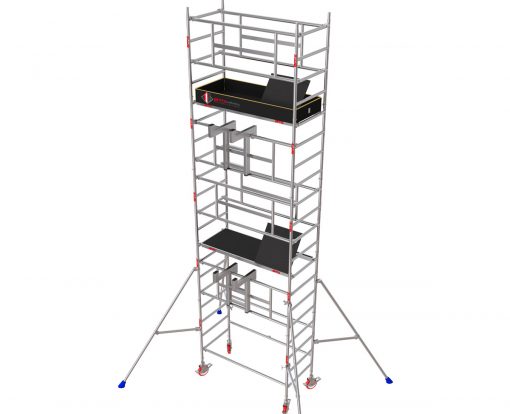
Where Aluminium Scaffold Towers Fit Practical Work
Aluminium scaffold towers provide elevated working platforms through a modular access system. Their relatively manageable component weight can simplify handling and relocation compared with heavier alternatives, although the complete tower still requires correct assembly, stability, loading, and inspection.
Typical applications may include:
- interior and exterior building maintenance;
- electrical, mechanical, and plumbing installation;
- painting, decorating, and finishing work;
- HVAC servicing and ceiling-level access;
- warehouse lighting, racking, and maintenance tasks;
- commercial property repairs and fit-out activities;
- industrial inspection and planned maintenance;
- short-duration access for repair or installation work.
Task conditions determine suitability. A compact indoor tower may fit a commercial corridor, while exposed external work may demand different stability provisions, environmental controls, and configuration choices. Likewise, industrial work can introduce nearby operations, restricted zones, contamination, or access constraints that change the equipment assessment.
Aluminium and Steel Systems Serve Different Needs
A useful comparison should examine:
- the intended work and duration;
- documented load and configuration requirements;
- frequency of dismantling or relocation;
- transport and manual-handling considerations;
- indoor, outdoor, industrial, or coastal exposure;
- maintenance and storage arrangements;
- available base area and access route;
- compatibility with the required platform arrangement.
Consequently, procurement teams should compare complete systems rather than treating aluminium and steel as interchangeable materials. A lighter tower still needs an appropriate base, approved bracing, secure platforms, protective components, and correct loading. Conversely, greater component weight does not automatically make another system more suitable.
Choose the Configuration Around the Task
Tower configuration affects access, usable platform area, movement, stability, and fit within the work zone. Common categories can include mobile towers, single-width towers, double-width towers, folding or compact arrangements, and systems offering different approved platform positions.
Single-width arrangements may suit restricted indoor areas where floor space is limited. Double-width configurations can provide more working space where the system design and site permit it. Folding arrangements may support short-duration or space-sensitive tasks, while mobile towers can help where work progresses along a suitable surface.
However, category names do not establish capability. Before selecting a configuration, check:
- required access and working position;
- available floor or ground footprint;
- doorway, corridor, ceiling, and obstruction constraints;
- number of people and items expected on the platform;
- approved platform positions;
- required stabilising components;
- movement requirements;
- manufacturer restrictions for the chosen configuration.
Working Height and Platform Height Need Separate Checks
Working height, platform height, and overall tower height can describe different measurements. Suppliers and manufacturers may present these terms differently, so buyers should confirm exactly what each quoted dimension represents.
Platform height refers to the level where the user stands. Overall tower height describes the physical height of the assembled structure. Working height commonly refers to the reachable work level associated with the platform, but users should not rely on an assumed formula because definitions and product information can vary.
Platform Space and Loading Must Match the Work
Platform dimensions influence how comfortably workers can position themselves, arrange tools, maintain access, and complete longer tasks. Narrow platforms may suit simple inspection or light maintenance in restricted spaces, whereas tasks involving equipment, materials, or repeated movement may require more usable area.
Loading requires equally careful assessment. Count every load placed on the working platform, including personnel, tools, equipment, and materials. Then compare the expected total and its distribution with the manufacturer’s documented ratings for the exact system.
Do not treat platform size as permission to add more weight. A physically larger deck does not establish a higher allowable load. Similarly, avoid using a general scaffolding rating from another model as a substitute for the documentation supplied with the tower.
Mobility Depends on Castors, Surfaces, and Surroundings
Before moving a tower, follow the manufacturer’s instructions and the site’s approved procedure. Never treat occupied movement as an acceptable shortcut. Remove or control loose items as required, check the intended route, and consider overhead cables, structures, openings, traffic, and changes in floor level.
Once positioned, secure castors and other relevant components as specified for that system. A locking wheel cannot compensate for an unsuitable surface, incorrect tower geometry, missing stabilisers, or poor assembly.
Stability Starts at the Base
Tower stability depends on the complete arrangement rather than the aluminium frame alone. Base condition, levelness, tower height, configuration, stabilising equipment, loading, environmental exposure, and nearby obstructions all influence performance.
Where the manufacturer specifies stabilisers or outriggers, users should fit the correct compatible components in the required arrangement. They should not improvise extensions, supports, packing, or mixed-system parts to compensate for an unsuitable base.
Useful site checks include:
- firm and suitable supporting surfaces;
- level positioning within system requirements;
- clear space for required stabilising components;
- absence of unprotected openings or edges nearby;
- sufficient clearance from moving plant and vehicles;
- consideration of wind and external exposure;
- protection from accidental impact or unauthorised alteration.
Saudi Heat, Dust, Wind, and Exposure Affect Use
Saudi sites can expose access equipment to high temperatures, strong sunlight, dust, sand, wind, and, in some locations, coastal conditions. The practical effect varies by site, season, task, and duration, so teams should assess actual conditions rather than apply broad assumptions.
Dust or sand can collect around castors, locking devices, joints, platforms, and connection points. Consequently, cleaning and inspection become important where contamination could prevent secure engagement or smooth component operation. Strong sunlight and heat can also affect working conditions for personnel, while stored equipment may face prolonged environmental exposure.
Outdoor towers require particular attention to wind and changing weather. Users should follow the system manufacturer’s limits, instructions, and site procedures rather than relying on a generic wind threshold.
Indoor and Outdoor Selection Raises Different Questions
Indoor work often provides controlled surfaces and less direct weather exposure, yet space can become the limiting factor. Door widths, lifts, corridors, ceiling clearances, floor finishes, public traffic, and nearby operations can determine which tower configuration fits.
Outdoor work adds ground variability, wind, vehicle movement, open edges, changing weather, and longer environmental exposure. Therefore, a configuration that performs suitably inside a warehouse should not automatically transfer to an exposed external area.
For indoor tasks, assess access routes before delivery and assembly. For outdoor tasks, examine the full working zone, not merely the point directly beneath the tower. Stabiliser clearance, pedestrian routes, plant movement, overhead hazards, excavations, and uneven surfaces can affect positioning.
Assembly Must Follow the Specific System
Scaffold systems differ in frame design, bracing, platforms, guardrail components, access arrangements, castors, stabilisers, and connection mechanisms. For that reason, crews should assemble each tower according to the manufacturer’s current instructions and approved configuration.
Before assembly, identify components and confirm that they belong to the intended system. During assembly, maintain the specified bracing, platform, access, guardrail, base, and stabilising arrangements. After assembly, complete the required site inspection before use.
Component compatibility deserves special attention. Similar dimensions or connection shapes do not prove that parts from different systems work safely together. Manufacturer specifications, connection design, structural interaction, and approved configuration determine compatibility.
What to Check Before a Tower Goes Into Service
A pre-use check should complement, not replace, formal inspection and site procedures. The person responsible should follow the applicable requirements for the project and equipment.
General checks may include:
- frames, braces, platforms, and protective components appear complete;
- components show no obvious cracks, deformation, or damaged welds;
- locking devices engage and operate as intended;
- platforms sit in their approved positions;
- guardrails and other required protective parts are present;
- castors function and remain secured as required;
- the base and surrounding surface remain suitable;
- stabilisers or outriggers are correctly fitted where specified;
- access routes remain clear and usable;
- no incompatible or unidentified components have entered the system;
- the assembled configuration matches manufacturer instructions;
- site conditions have not changed since assembly.
Inspection Should Identify Damage Before It Becomes a Hazard
Inspection should focus on condition as well as completeness. Deformation, cracks, damaged welds, worn castors, faulty locking devices, damaged platforms, missing components, and contamination around connections can all justify closer assessment.
Workers should not straighten, weld, drill, substitute, or otherwise improvise repairs unless the manufacturer’s authorised process specifically permits the action. A part that looks repairable may have damage that affects fit, locking, alignment, or structural behaviour.
Maintenance and Storage Protect System Integrity
A practical storage routine can include:
- inspecting components during dismantling;
- separating damaged or questionable parts;
- keeping compatible system components together;
- storing frames, braces, and platforms to avoid impact damage;
- keeping connection points reasonably clean;
- checking castors and moving mechanisms for condition;
- preventing unrelated scaffold parts from mixing;
- protecting stored equipment from avoidable environmental exposure.
Buying or Renting Depends on the Usage Pattern
Purchase can suit organisations with recurring access requirements, predictable configurations, storage capacity, transport arrangements, and internal processes for inspection and maintenance. Rental can suit shorter projects, changing tower needs, limited storage, or teams that need specific configurations for defined periods.
Neither route removes user responsibilities. Before deciding, compare:
- expected frequency and duration of use;
- range of configurations required;
- transport to and between sites;
- storage space and stock control;
- inspection and maintenance responsibilities;
- replacement-component availability;
- rental collection, return, and damage conditions;
- availability during planned project periods.
Evaluate Suppliers and Rental Providers Through Documentation
A useful provider comparison focuses on equipment suitability, documentation, configuration clarity, and support rather than broad marketing claims. Before committing, procurement teams can ask:
- Which configuration matches the stated task and site constraints?
- What technical specifications accompany the exact system?
- Does the provider supply a clear component list?
- Are manufacturer assembly instructions available?
- What inspection information accompanies supplied equipment?
- Which replacement components remain available?
- What tower widths, platform arrangements, and approved configurations can be supplied?
- What documentation accompanies delivery?
- How do delivery, collection, and transport arrangements work?
- For rentals, which responsibilities apply during possession and return?
Match Selection to the Work Environment
Commercial Indoor Maintenance
Restricted corridors, finished floors, doorways, public movement, and ceiling services can shape the configuration. Compact dimensions and controlled mobility may matter, but the floor must still support safe positioning and required stabilisation.
External Façade and Building Work
Ground conditions, wind exposure, open surroundings, stabiliser space, nearby traffic, and changing weather require stronger attention. The required access position may also make another access method more appropriate.
Warehouse and MEP Tasks
Warehouses can involve smooth floors alongside vehicle routes, racking, overhead services, and operational traffic. MEP work may require tools or components on the platform, so usable area and documented loading need careful checks.
Industrial Maintenance and Short Inspections
Industrial environments can add process hazards, restricted access, contamination, or adjacent operations. Short inspection tasks may require less platform activity, but brief duration does not remove assembly, stability, access, or inspection requirements.
A Practical Selection Principle
Suitable aluminium scaffolding depends on the task, required access, approved configuration, platform needs, expected loading, base condition, environmental exposure, and system documentation. Saudi projects may add heat, dust, wind, coastal exposure, traffic, or uneven external surfaces that require site-specific controls. Procurement teams should compare documented capabilities, while users should follow manufacturer instructions, project specifications, site safety procedures, and applicable requirements. A tower becomes appropriate only when its complete configuration and condition match the work environment; material choice alone never establishes suitability.
FAQs
Is aluminium scaffolding better than steel scaffolding?
Neither material suits every task. Aluminium can offer easier handling and relocation because system components may weigh less, while steel systems may serve different structural or project needs. Compare the exact configuration, documented loading, environment, transport requirements, maintenance arrangements, and applicable site rules before selecting either option.
Can aluminium scaffold towers be used outdoors in Saudi Arabia?
Some systems may support outdoor use when their manufacturer documentation permits the intended configuration and conditions. Outdoor assessment should consider wind, ground condition, dust, sand, exposure, nearby traffic, and stabilisation requirements. Users should follow model-specific instructions and site procedures rather than assuming every mobile tower suits external work.
How should I choose the correct working height?
Identify the actual work location first, then distinguish platform height, overall tower height, and the provider’s stated working height. Select an approved platform position that supports suitable access without overreaching. Because terminology can vary, verify dimensions and definitions in the technical documentation for the exact tower configuration.
Can workers move a mobile scaffold tower while someone remains on it?
Do not treat occupied movement as a normal relocation method. Follow the manufacturer’s instructions and approved site procedure for the specific tower. Before movement, assess the route, surface, obstacles, overhead hazards, slopes, loose items, and surrounding people or operations, then apply all required controls.
What counts towards a scaffold platform’s load?
Platform loading includes people, tools, equipment, and materials placed on the working level. Users should consider the total load and its distribution, then compare them with the manufacturer’s documented capacity for the exact system and configuration. Never infer capacity from platform size or from another scaffold model.
How can Saudi dust and sand affect a mobile tower?
Dust and sand can accumulate around castors, locks, joints, connection points, and platform surfaces. Such contamination may interfere with secure engagement, movement, or footing. Cleaning and inspection should therefore address affected areas according to manufacturer instructions and site procedures, particularly after outdoor exposure or storage in dusty conditions.
How often should aluminium scaffolding be inspected?
Inspection frequency can depend on the system, site rules, project requirements, events affecting equipment condition, and current applicable requirements. Avoid applying an invented universal interval. Follow the manufacturer’s documentation and the project’s inspection process, and reassess equipment after damage, impact, relocation, severe exposure, or other relevant events.
Is renting better than buying aluminium scaffolding?
The better commercial arrangement depends on usage frequency, project duration, required configurations, storage, transport, maintenance capability, inspection responsibilities, and equipment availability. Recurring predictable use may support ownership, while short or changing requirements may favour rental. Compare the complete operating implications rather than only the initial price.
What should I ask an aluminium scaffolding supplier?
Ask for technical specifications, approved configurations, component lists, assembly instructions, inspection information, replacement-part availability, platform options, delivery arrangements, and relevant documentation. For rentals, also clarify possession, damage, return, and collection responsibilities. Confirm that the proposed equipment matches the task, environment, access constraints, and expected loading.
Can components from different scaffold systems be mixed?
Do not assume compatibility because components look similar or physically connect. Different systems can use distinct connection designs, dimensions, locking methods, materials, and structural arrangements. Use only combinations supported by the relevant manufacturer documentation and approved configuration. Keep separate systems organised during transport, storage, assembly, and maintenance.