Mobile scaffolding provides temporary elevated access where teams need a working platform that can be repositioned. For mobile scaffolding Finland projects, suitability depends on more than height or portability. Users must consider the task, loading, supporting surface, access, weather, assembly, and environment. A tower suited to indoor electrical installation may not suit exposed exterior maintenance. Therefore, selection should start with the work area and required configuration.
Where Mobile Scaffolding Fits
Mobile scaffold towers can support construction finishing, painting, electrical installation, HVAC tasks, ceiling work, inspection, repairs, building maintenance, and warehouse operations. They suit locations where workers need to shift an elevated platform along an area.
Mobility helps when work progresses horizontally, such as ceiling installation or repeated maintenance. However, suitability changes with working height, duration, access, platform loading, available space, and surface condition. Extensive façade work, heavy material demands, or difficult terrain may favour another access arrangement.
Mobile Towers and Fixed Scaffolding
A mobile tower provides access within a compact area and allows controlled relocation when conditions permit. Fixed scaffolding can provide broader continuous access and remain positioned for longer periods.
Neither suits every project. Indoor maintenance across several ceiling locations may favour mobility, while extensive exterior work may require access across a larger area. Working height, platform space, relocation, ground conditions, exposure, and task type should shape the choice.
Components That Shape Practical Use
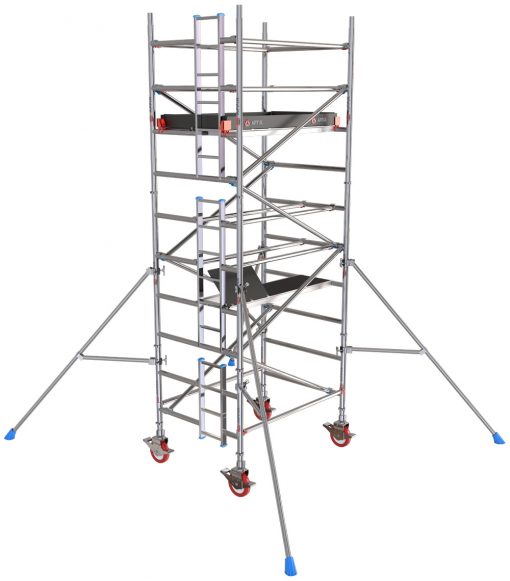
Tower configurations vary by system and application. Frames form the structure, while horizontal and diagonal braces maintain geometry and stiffness. Platforms create the working surface; guardrails and toe boards provide protection where the configuration requires them.
Castors enable movement, while wheel brakes prevent unintended rolling during use. Stabilisers or outriggers can increase support when specified. Meanwhile, ladders or integrated access systems provide a route to working levels. Users should assemble compatible components according to applicable instructions rather than assuming different systems are interchangeable.
Height, Platform Space, and Loading
Scaffold height, platform height, and practical working height describe different things. Platform height identifies the level on which workers stand, whereas overall scaffold dimensions can extend beyond that level. Practical reach also depends on the task and worker position, so buyers should avoid selecting equipment from a vague height description.
Platform dimensions affect how workers move, position tools, handle materials, and maintain usable space. Similarly, rated load capacity must account for permitted loads placed on the platform, including workers, tools, and materials. Users should check the documented capacity for the selected configuration instead of estimating what the structure can carry.
Finnish Indoor and Outdoor Conditions
Finnish outdoor conditions can change tower suitability. Wind, rain, snow, ice, freezing temperatures, and uneven ground can affect stability, traction, access, and support. Exposure varies by site, however, so users should carefully assess conditions and follow applicable equipment restrictions.
Indoors, floor condition, doorways, ceiling height, machinery, overhead services, and narrow passages can restrict assembly or movement. A tower may fit the work position yet remain impractical to move between areas.
Ground and Surface Conditions
A mobile scaffold needs a firm, suitable supporting surface. Users should check levelness, slopes, loose material, floor openings, uneven paving, snow, ice, obstructions, and changes in surface level before positioning or moving the structure.
Castors do not compensate for unsuitable ground. Brakes must perform their intended locking function during stationary use, while stabilisation measures must match the system instructions and site conditions. If the surface cannot support stable positioning or controlled movement, users should address the condition or select another access method.
Assembly, Positioning, and Movement
Assembly should follow the applicable manufacturer’s instructions and workplace safety procedures. Before use, workers should confirm that required frames, braces, platforms, guardrails, access components, stabilisers, castors, and locking arrangements are installed and serviceable.
Movement creates hazards that differ from stationary use. Finnish construction safety requirements specifically address mobile scaffolds, including support conditions, locked wheels during use, stability, and restrictions on moving a scaffold while a worker remains on the platform. Therefore, teams should treat repositioning as a separate operation and remove materials that could fall or create hazards during movement.
Pre-Use Inspection
Inspection should reflect both the tower configuration and its surroundings. Before work begins, check:
- missing, damaged, bent, loose, or incompatible components;
- secure frame and brace connections;
- platform condition and correct positioning;
- required guardrails and toe boards;
- castor condition and wheel-lock operation;
- stabilisers or outriggers where specified;
- designated access arrangements;
- firmness and levelness of the supporting surface;
- overhead services or other hazards;
- nearby openings, edges, obstacles, and traffic.
Conditions can change after relocation, weather changes, impacts, or alterations. Consequently, users should reassess the tower whenever circumstances could affect its safe configuration or support.
Checks Before Hiring or Purchasing
Start with the required platform and working height, then assess platform dimensions and the expected combined workload. Next, identify whether the tower will operate indoors, outdoors, or across both environments because exposure and surface conditions can differ substantially.
Buyers and hirers should consider relocation, access restrictions, storage, transport, assembly demands, and compatible components. Documentation matters because users need correct assembly, use, inspection, and maintenance information. Equipment condition also matters; damaged or incomplete components can make a suitable configuration unusable.
Storage and Maintenance
Keep components clean enough for inspection and prevent damaged parts from returning to service. Check frames, braces, platforms, connections, castors, locks, stabilisers, and access components for damage, wear, deformation, corrosion, or deterioration.
Store components in an organised, suitably dry location that limits damage and separates incompatible parts. Maintenance should follow applicable instructions. If inspection identifies damage or uncertain functionality, keep the affected component out of service until appropriately addressed.
Selecting for the Actual Work
The appropriate mobile scaffold depends on the work itself: required height, platform space, permitted loading, movement needs, environment, supporting surface, configuration, and applicable safety requirements. Finnish outdoor conditions can add variables that sheltered indoor projects do not face, while restricted interiors create their own access challenges. A sound selection process therefore matches the tower to the task and site, verifies compatible components and documentation, and treats assembly, inspection, stationary use, and repositioning as distinct stages requiring proper control.