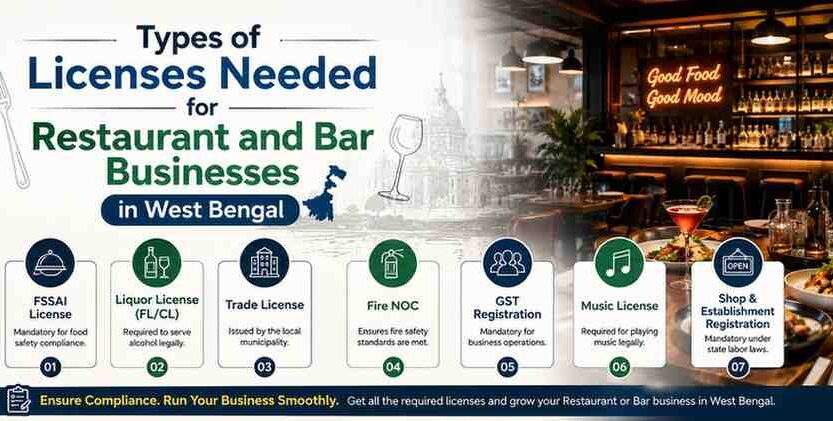
Restaurant and bar businesses in West Bengal require multiple approvals before starting operations legally. Authorities monitor food safety, liquor distribution, fire protection, environmental compliance, and municipal regulations to ensure responsible business practices. Moreover, each license serves a distinct purpose and supports operational transparency. Businesses operating without mandatory approvals may face penalties, suspension notices, or closure actions. Consequently, restaurant owners should identify all applicable licenses before opening a commercial establishment. Proper compliance not only protects legal operations but also strengthens customer confidence and administrative efficiency for a restaurant bar license in West Bengal.
Why Licensing Is Important for Restaurants and Bars?
Licensing creates a structured regulatory system for hospitality businesses operating in West Bengal. Moreover, authorities use licensing procedures to monitor hygiene, public safety, taxation, and liquor control standards effectively.
Restaurants and bars serving food or alcoholic beverages interact with public health systems regularly. Consequently, authorities require establishments to comply with sanitation practices, infrastructure norms, and operational rules before granting approvals.
Licensed businesses gain stronger credibility among customers, suppliers, and financial institutions. In contrast, unlicensed establishments may encounter operational restrictions, financial penalties, or legal proceedings. Furthermore, proper approvals simplify inspections and administrative communication.
Several departments regulate restaurant and bar operations simultaneously. Therefore, owners should secure every mandatory approval before launching commercial activities. Consequently, the restaurant bar license in West Bengal supports legal business continuity and responsible hospitality operations.
Food Safety License
Food safety approval remains one of the most important licenses for restaurant businesses. Authorities require establishments serving food to maintain proper hygiene standards and safe food handling practices.
Purpose of Food Safety Approval
Food safety authorities regulate preparation, storage, and service procedures to protect consumer health. Moreover, licensing ensures that restaurants maintain cleanliness standards, proper kitchen systems, and safe ingredient management practices.
The approval generally applies to:
- Restaurants
- Cafes
- Bars serving food
- Fast-food outlets
- Catering units
- Cloud kitchens
Consequently, businesses must obtain this approval before starting food-related operations.
Documents Commonly Required
Applicants generally submit:
- Identity proof
- Address proof
- Kitchen layout
- Equipment details
- Water testing report
- Business registration documents
Authorities may also inspect kitchen facilities before approving. Therefore, restaurant owners should maintain hygienic conditions consistently.
Liquor License for Bars and Restaurants
Liquor licensing remains essential for establishments serving alcoholic beverages. Moreover, authorities regulate liquor sales strictly to maintain legal distribution and public order.
Importance of Liquor Licensing
Restaurants and bars cannot serve alcohol legally without proper authorization. Consequently, businesses should identify the correct category of liquor license according to operational requirements.
Different categories may apply based on:
- Restaurant type
- Seating capacity
- Service style
- Entertainment arrangements
- Operational timings
Moreover, authorities examine location suitability before approving liquor sales permissions.
Common Requirements for Liquor Approval
Applicants generally require:
- Property ownership documents
- Food service approval
- Identity records
- Building layout
- Fire safety clearance
- Police verification
Consequently, restaurant owners should prepare detailed operational records before filing applications for a restaurant bar license in West Bengal.
Trade License
Municipal authorities issue trade licenses for commercial establishments operating within specific jurisdictions. Therefore, restaurants and bars must obtain municipal approval before beginning operations.
Role of Trade Licensing
Trade licenses verify whether establishments comply with local civic regulations and zoning conditions. Moreover, authorities examine sanitation standards and business activities before approving.
Trade licensing supports:
- Legal business operations
- Municipal monitoring
- Public health management
- Commercial zoning compliance
Consequently, businesses should renew trade licenses according to prescribed timelines to maintain uninterrupted operations.
Key Documents for Trade License
Applicants generally provide:
- Property tax records
- Identity proof
- Business address proof
- Rental agreement
- Ownership documents
Authorities may also conduct site inspections before approval. Therefore, maintaining proper infrastructure improves licensing efficiency.
Fire Safety Clearance
Fire safety compliance remains critical for hospitality establishments because restaurants and bars often handle electrical equipment, cooking systems, and combustible materials.
Importance of Fire Safety Approval
Authorities require businesses to install emergency systems that protect customers, employees, and property during emergencies. Moreover, fire safety inspections verify whether establishments maintain proper evacuation arrangements.
Inspection teams commonly assess:
- Fire extinguishers
- Emergency exits
- Alarm systems
- Electrical wiring
- Kitchen ventilation
Consequently, restaurants should maintain functional safety systems consistently.
Common Fire Safety Requirements
Businesses may require:
- Building approval
- Fire equipment installation
- Emergency signage
- Safety inspection certificate
Moreover, authorities may reject applications if establishments fail to meet safety standards. Therefore, restaurant owners should prioritize preventive safety arrangements before operations begin.
Pollution Control Approval
Restaurants and bars generating waste, smoke, or wastewater may require pollution control authorization. Consequently, environmental compliance forms an important part of licensing procedures.
Purpose of Pollution Control Approval
Authorities monitor waste disposal and environmental impact generated by commercial food establishments. Moreover, pollution control systems reduce sanitation risks and improve urban environmental management.
Restaurants generally require systems for:
- Wastewater disposal
- Oil and grease management
- Garbage disposal
- Smoke ventilation
Consequently, businesses should establish proper waste handling procedures before applying for operational approvals.
Documents Usually Required
Authorities commonly request:
- Kitchen layout
- Waste disposal plan
- Water usage details
- Business registration documents
Moreover, establishments with larger operations may face additional environmental compliance obligations depending on operational capacity.
GST Registration
Restaurants and bars involved in taxable transactions generally require GST registration for legal tax compliance. Moreover, businesses serving alcohol and food separately may face different taxation structures.
Importance of GST Compliance
GST registration supports:
- Legal invoicing
- Tax collection
- Input tax credit
- Financial transparency
Consequently, businesses should maintain organized accounting systems after obtaining registration.
Common Requirements
Applicants generally provide:
- PAN card
- Aadhaar card
- Business address proof
- Bank account details
- Ownership records
Moreover, accurate tax reporting reduces compliance complications and strengthens financial management for a restaurant bar license in West Bengal.
Eating House License
Police authorities generally issue eating house approvals for restaurants and hospitality establishments serving food to the public. Consequently, businesses should secure this approval before commercial operations begin.
Purpose of Eating House Approval
Authorities use eating house licensing to monitor public safety, crowd management, and operational conduct. Moreover, police verification supports regulatory supervision for customer-serving establishments.
Restaurants, cafes, and bars with dining arrangements may require this approval depending on operational structure and local regulations.
Documents Commonly Submitted
Applicants usually provide:
- Identity proof
- Fire safety clearance
- Building layout
- Ownership documents
- Employee details
Consequently, organized documentation supports faster verification and approval procedures.
Music and Entertainment License
Restaurants and bars offering live music, recorded entertainment, or public performances may require additional permissions from licensing authorities.
Why Entertainment Licensing Matters?
Authorities regulate commercial music usage and public entertainment activities to ensure lawful operations. Moreover, licensing supports copyright compliance and public order management.
Businesses commonly requiring entertainment approval include:
- Bars with DJs
- Restaurants with live performances
- Lounges hosting music events
Consequently, owners should verify entertainment licensing requirements carefully before arranging commercial performances.
Signage and Advertisement Approval
Restaurants displaying outdoor signboards or illuminated advertisements often require municipal approval before installation.
Importance of Signage Permission
Authorities regulate commercial signage to maintain traffic visibility, urban planning standards, and public safety. Moreover, improper installations may create legal disputes or municipal penalties.
Businesses generally submit:
- Signboard design
- Installation details
- Property approval
- Municipal application forms
Consequently, restaurant owners should verify local signage rules before placing outdoor advertisements.
Shops and Establishment Registration
Restaurants and bars operating with employees generally require registration under the Shops and Establishments regulations. Moreover, this approval supports labor law compliance and workforce management.
Purpose of Registration
Authorities monitor:
- Employee working conditions
- Business operating hours
- Wage compliance
- Leave records
Consequently, businesses should maintain organized employment documentation after registration.
Documents Commonly Required
Applicants usually submit:
- Employee information
- Identity proof
- Business address proof
- Ownership documents
Furthermore, labor inspections may occur periodically after operational approval.
Health Department Approval
Health department clearance supports public hygiene management and sanitation monitoring for food-serving establishments.
Role of Health Department Verification
Authorities examine:
- Kitchen cleanliness
- Waste disposal
- Water quality
- Food storage conditions
Consequently, restaurants should maintain hygienic practices consistently to avoid penalties or suspension notices.
Common Compliance Requirements
Businesses often require:
- Pest control systems
- Safe water supply
- Clean food preparation areas
- Staff hygiene arrangements
Moreover, authorities may conduct surprise inspections after operational approval.
Renewal Requirements for Restaurant and Bar Licenses
Many operational approvals require periodic renewal according to departmental regulations. Therefore, businesses should monitor renewal schedules carefully.
Commonly Renewable Licenses
The following approvals usually require renewal:
- Liquor license
- Trade license
- Fire safety certificate
- Food safety approval
- Pollution control authorization
Consequently, failure to renew licenses on time may interrupt business operations or trigger penalties.
Documents Required During Renewal
Authorities may request:
- Updated business records
- Safety inspection reports
- Tax compliance details
- Employee information
- Utility bills
Moreover, establishments should maintain organized documentation throughout operational periods to simplify renewals.
Common Licensing Mistakes Businesses Should Avoid
Many restaurant and bar owners face compliance issues because of avoidable administrative mistakes. Therefore, identifying common errors helps businesses reduce operational risks.
Frequent licensing mistakes include:
- Operating without a liquor authorization
- Delayed license renewals
- Incorrect business classification
- Poor sanitation management
- Incomplete fire safety systems
- Unapproved signage installation
- Missing employee records
- Incorrect GST filings
Consequently, businesses should review operational compliance regularly to prevent legal complications.
Another common issue involves submitting inconsistent information across different applications. Therefore, owners should maintain uniform business details throughout all licensing procedures.
Benefits of Proper Licensing for Hospitality Businesses
Proper licensing strengthens operational stability and improves long-term business management for restaurants and bars. Moreover, licensed establishments attract greater customer trust and administrative credibility.
Key advantages include:
- Legal operational security
- Better customer confidence
- Smooth inspections
- Improved vendor coordination
- Easier tax management
- Reduced legal risks
- Stronger business reputation
- Better financial transparency
Consequently, organized compliance systems support sustainable business growth within the hospitality sector.
Licensed establishments also gain smoother access to banking services, insurance support, and commercial expansion opportunities. Furthermore, authorities generally process administrative requests more efficiently for compliant businesses.
Role of Infrastructure Compliance in Licensing
Infrastructure readiness significantly influences approval procedures for restaurant and bar establishments. Consequently, authorities examine structural arrangements carefully before granting operational permissions.
Restaurants and bars should maintain:
- Adequate seating arrangements
- Proper ventilation systems
- Clean kitchen layouts
- Functional drainage systems
- Emergency exits
- Safe electrical installations
Moreover, authorities often verify customer safety standards during inspections. Poor infrastructure conditions may therefore delay approvals or trigger rejection notices.
Kitchen areas require particular attention because authorities monitor food preparation systems, waste disposal methods, and employee hygiene conditions closely. Consequently, businesses should maintain organized workspaces and operational cleanliness continuously.
Parking arrangements, washroom facilities, and ventilation systems also affect inspection outcomes. Furthermore, establishments located in congested commercial zones may require additional municipal clearances depending on local regulations.
Businesses planning entertainment activities should also verify sound control and crowd management arrangements before applying for approvals. Consequently, careful infrastructure planning supports smoother inspections and faster licensing outcomes for a restaurant bar license in West Bengal.
Importance of Ongoing Compliance Monitoring
Licensing responsibilities continue even after authorities grant operational approvals. Therefore, restaurant and bar owners should establish structured compliance monitoring systems for uninterrupted business operations.
Authorities may conduct periodic inspections to examine hygiene standards, fire safety arrangements, liquor stock records, and employee documentation. Consequently, businesses should maintain updated operational records consistently.
Important monitoring areas include:
- Employee safety practices
- Food storage standards
- Fire equipment maintenance
- Waste disposal management
- Tax filing compliance
- Liquor inventory records
Moreover, businesses should respond promptly to inspection notices and departmental communication to avoid legal complications.
Conclusion
Restaurant and bar businesses in West Bengal require multiple operational approvals to maintain legal compliance and responsible hospitality standards. Proper licensing supports food safety, fire protection, tax transparency, environmental management, and public safety regulations. Moreover, organized compliance systems reduce legal risks and strengthen business credibility among customers and authorities. Consequently, business owners should identify applicable approvals carefully and maintain consistent operational standards after obtaining licenses. A structured approach toward restaurant bar licenses in West Bengal supports sustainable hospitality operations and long-term commercial stability.
FAQs
1. Why do restaurants and bars require multiple licenses in West Bengal?
Different authorities regulate food safety, liquor distribution, municipal operations, fire protection, taxation, and environmental compliance separately. Consequently, restaurants and bars must obtain multiple approvals before starting operations legally. Proper licensing protects public safety, improves operational transparency, and supports responsible hospitality business management across West Bengal.
2. Is a liquor license mandatory for restaurants serving alcohol?
Restaurants and bars cannot serve alcoholic beverages legally without proper liquor authorization. Authorities regulate alcohol distribution strictly to maintain lawful operations and public order. Consequently, businesses planning alcohol service should secure the appropriate liquor license before beginning commercial activities within West Bengal’s hospitality sector.
3. What happens if a restaurant operates without a food safety license?
Authorities may impose penalties, suspend operations, or initiate legal action against food establishments operating without mandatory food safety approval. Moreover, unlicensed operations may damage customer trust significantly. Consequently, restaurants should obtain proper food safety clearance before preparing or serving food to the public commercially.
4. Why is fire safety clearance important for hospitality businesses?
Restaurants and bars handle cooking systems, electrical equipment, and crowded customer spaces regularly. Therefore, fire safety systems protect customers, employees, and property during emergencies. Authorities examine emergency exits, extinguishers, alarm systems, and electrical installations carefully before granting operational approval for hospitality establishments in West Bengal.
5. Do restaurant licenses require periodic renewal?
Many operational licenses require renewal according to departmental regulations and validity periods. Authorities may examine updated records, safety certificates, and compliance status during renewal procedures. Consequently, restaurant and bar owners should monitor renewal schedules carefully to avoid penalties, suspension notices, or operational interruptions.
6. Can authorities inspect restaurants after license approval?
Authorities may conduct routine or surprise inspections even after granting operational approvals. Inspection teams commonly examine sanitation practices, fire safety arrangements, food storage systems, and employee records. Consequently, businesses should maintain compliance continuously instead of focusing only on initial approval requirements during restaurant operations.
7. Why does GST registration matter for restaurant businesses?
GST registration supports lawful invoicing, tax collection, and financial transparency for restaurants and bars conducting taxable transactions. Moreover, organized tax compliance improves accounting systems and administrative credibility. Consequently, businesses should maintain accurate financial records and timely tax filings after obtaining GST registration approval.
8. Which documents commonly delay restaurant licensing approval?
Incomplete fire safety certificates, incorrect ownership records, invalid identity proof, unclear building plans, and inconsistent business information frequently delay approvals. Moreover, missing employee records and poor infrastructure documentation also create complications. Consequently, businesses should verify every document carefully before submitting licensing applications to authorities.
9. Why do restaurants require pollution control approval?
Restaurants generate wastewater, food waste, grease, and smoke during operations. Therefore, pollution control authorities regulate waste disposal systems and environmental impact management carefully. Proper environmental compliance reduces sanitation risks and supports sustainable commercial operations. Consequently, businesses should establish organized waste management systems before applying for approvals.
10. How does proper licensing improve restaurant business credibility?
Licensed establishments demonstrate compliance with food safety, taxation, public safety, and operational regulations. Moreover, customers, suppliers, insurers, and authorities generally prefer compliant businesses for commercial interaction. Consequently, proper licensing strengthens business reputation, improves operational continuity, and supports sustainable growth for restaurant and bar establishments.