Vintage Camy watches attract attention through their traditional styling, mechanical construction and distinctive ageing characteristics. However, two watches carrying the same name may differ considerably in originality, condition and functionality.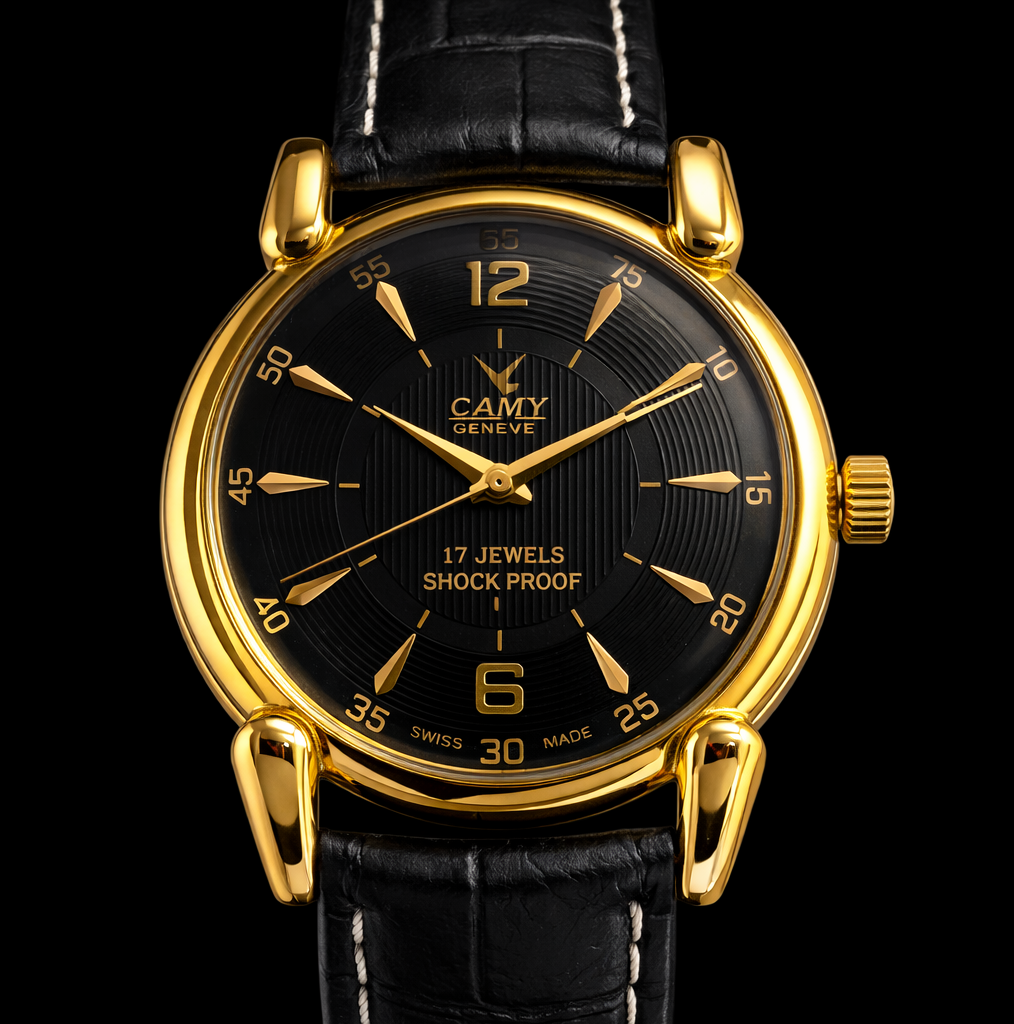
Before purchasing, buyers should examine more than the dial and external appearance. Previous repairs, replacement components and neglected movements can significantly affect ownership costs. Careful inspection helps distinguish a desirable vintage wristwatch from an attractive example requiring substantial restoration.
What Makes Vintage Camy Watches Appealing?
Vintage Camy wristwatches offer an alternative to contemporary designs through their restrained proportions, traditional dial arrangements and period styling. However, individual examples vary considerably.
Dial Designs and Case Characteristics
Older Camy watches may feature simple numerical markers, applied indices, contrasting hands or decorative dial finishes. Their appearance depends on the individual example.
Collectors should examine several visible details:
-
Dial markings: Check lettering, alignment, minute tracks and any additional inscriptions.
-
Hour markers: Look for consistent positioning, secure attachment and signs of replacement.
-
Case shape: Examine proportions, lug construction and evidence of previous polishing.
-
Surface finish: Identify scratches, plating wear, corrosion and uneven refinishing.
-
Crystal: Inspect scratches, cracks, cloudiness and possible replacement.
Although cosmetic ageing can create visual character, extensive deterioration may reduce usability or complicate restoration.
Manual and Automatic Variations
Some older mechanical wristwatches require manual winding, while others incorporate automatic winding systems. Buyers must identify the actual movement before assuming either arrangement.
Similarly, case dimensions, crown designs and movement specifications require individual verification rather than assumptions based on appearance.
How to Assess Authenticity and Originality
Authenticity deserves particular attention because replacement components and previous restoration can change a vintage watch considerably.
A genuine movement does not automatically establish that every other component belongs to the original configuration.
Examine the Dial and Brand Markings
Dial printing should appear reasonably consistent with the watch’s apparent construction and age. Uneven lettering or unusual spacing may warrant further investigation.
However, printing variations alone cannot establish counterfeiting. Previous refinishing, ageing and manufacturing differences may explain certain irregularities.
Examine these details carefully:
-
Compare dial markings with credible photographs of similar examples.
-
Inspect hand shapes and their compatibility with the dial.
-
Check whether the crown appears appropriate for the case.
-
Request photographs showing movement markings and construction.
-
Examine case-back engravings without assuming they prove authenticity.
A refinished dial may improve appearance while reducing originality. Conversely, an untouched dial may retain stains or discolouration.
Distinguish Restoration From Misrepresentation
Restoration does not automatically indicate a counterfeit watch. Nevertheless, sellers should disclose significant replacements and cosmetic alterations.
For example, replacement hands may improve usability but change collector appeal. An original dial with visible ageing presents a different proposition.
Professional inspection becomes particularly valuable when photographs reveal inconsistent components or sellers cannot explain previous modifications.
Mechanical Condition Matters Beyond Appearance
An attractive exterior offers limited information about the movement’s internal condition. Therefore, buyers should investigate functionality before comparing asking prices.
Movement Operation and Servicing
A mechanical watch may run briefly despite requiring cleaning, lubrication or component replacement.
Ask sellers about the following:
-
Winding: Does the crown turn smoothly without unusual resistance?
-
Timekeeping: Has anyone checked performance over a meaningful period?
-
Power reserve: How long does the movement operate after sufficient winding?
-
Crown operation: Can the wearer adjust the hands correctly?
-
Servicing: Does the seller possess credible maintenance records?
-
Parts: Can a competent watchmaker obtain compatible replacement components?
Furthermore, a running movement does not guarantee dependable performance during regular wear.
Older mechanisms may show greater timekeeping variation than modern watches. Buyers should therefore avoid expecting contemporary accuracy without appropriate assessment.
Inspect Physical Wear Carefully
Scratched crystals and minor case marks often affect appearance more than mechanical operation. In contrast, corrosion can indicate deeper problems.
Excessive polishing may soften case edges, while worn plating can expose underlying material.
Likewise, moisture damage around the dial or movement deserves particular caution.
Buying Vintage Camy Watches Online in India
People planning to buy vintage camy online in India should prioritise transparent listings, detailed photographs and clear purchasing conditions.
Remote transactions limit physical inspection. Consequently, sellers must provide sufficient information to assess the actual watch.
Photographs and Seller Documentation
Request sharp photographs of the dial, case sides, crown, case back and movement.
Movement photographs are especially useful because they reveal information that exterior images cannot provide.
Additionally, compare descriptions against visible condition. Statements such as excellent condition require supporting details rather than attractive photographs alone.
Payment, Delivery and Return Checks
Before ordering, confirm these practical arrangements:
-
Verify seller identity, transaction history and available feedback.
-
Request written clarification about functionality and previous repairs.
-
Check return eligibility if the watch differs from its description.
-
Confirm packaging protection and shipping insurance arrangements.
-
Calculate delivery charges and potential restoration expenses.
-
For overseas orders, verify applicable import charges before payment.
After delivery, photograph the package and inspect the watch promptly.
However, avoid opening the movement yourself without suitable equipment and technical knowledge.
Price, Value and Long-Term Care
Vintage Camy asking prices can differ because condition, originality, movement performance and design characteristics vary between individual examples.
Comparing Available Watches
Compare watches with similar construction and documented condition rather than relying on advertised prices alone.
A higher price does not necessarily indicate authenticity, rarity or superior mechanical quality.
Moreover, a cheaper watch requiring extensive servicing may ultimately cost more than a functional example.
Original components can influence collector interest, although practical buyers may reasonably prefer sympathetic restoration.
Protecting an Older Mechanical Watch
Careful ownership reduces avoidable deterioration.
-
Keep the watch away from moisture and unnecessary impacts.
-
Avoid strong magnetic fields and extreme storage conditions.
-
Wind gently and stop if resistance feels abnormal.
-
Store the watch somewhere clean, dry and secure.
-
Consult a qualified watchmaker when performance deteriorates.
Importantly, never assume that an older case remains water-resistant merely because it carries historical markings.
Professional servicing should reflect the movement’s actual condition and intended usage.
Conclusion
Vintage Camy watches deserve individual assessment rather than assumptions about their age, appearance or mechanical construction.
Originality, movement condition, restoration history and seller transparency collectively influence purchasing decisions.
Although cosmetic ageing may appeal to collectors, hidden mechanical problems can create unexpected expenses. Detailed photographs, credible documentation and professional inspection help reduce uncertainty.
Ultimately, realistic expectations about maintenance and performance support more satisfying long-term ownership.